Increased use of generic statins proves cost effective in Australia Posted 25/05/2012
A recent study concluded that closing the statin ‘treatment gap’ using generics was cost-effective in the secondary prevention of coronary artery disease (CAD) in Australia [1].
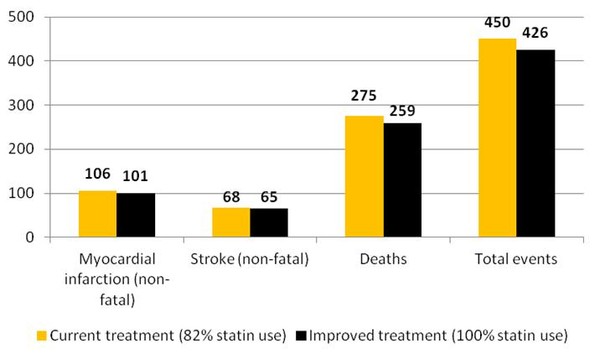
In Australia, statins–HMG-CoA reductase inhibitors–are recommended for patients with, or at high risk, of cardiovascular disease. Using data from the population-based Australian REduction of Atherothrombosis for Continued Health (REACH) Registry, mathematic modelling was used to determine the cost-effectiveness, in terms of incremental cost-effectiveness ratio [2] per life-year gained, and of increasing generic statin use among Australian patients with existing CAD compared with current practice. The model compared the current statin coverage (82%) in the secondary prevention of CAD (current group) with a hypothetical situation of 100% coverage (improved group). The 18% gap was filled with use of generic statins. A total of 2,058 subjects aged ≥ 45 years with established CAD were included in the analysis, of these 1,687 (82%) were receiving statins. In the current group, it was estimated that there would be 106 non-fatal myocardial infarctions, 68 non-fatal strokes and 275 deaths over five years. This was compared to 101, 65 and 259, respectively, in the improved group, see Figure 1. This equated to numbers needed to treat of 426, 639 and 127 respectively. Over the five years, there would be 0.018 life-years gained at a net cost of AUS$546 per person, equating to an incremental cost-effectiveness ratio of AUS$29,717 per life-year gained.
Figure 1: Events due to coronary artery disease in CAD patients [1] The authors conclude that increasing the use of generic statins among subjects with existing CAD would be cost-effective when the statins cost up to AUS$600 per person per year, representing a cost-effective means of secondary prevention of CAD. Related article Brand-name statins costing healthcare system US$6.7 billions References 1. Ademi Z, Reid CM, Hollingsworth B, Stoelwinder J, Steg PG, Bhatt DL, et al. Cost-effectiveness of optimizing use of statins in Australia: using outpatient data from the REACH Registry. Clin Ther. 2011;33(10):1456-65. 2. GaBI Online - Generics and Biosimilars Initiative. What is the incremental cost-effectiveness ratio (ICER) [www.gabionline.net]. Mol, Belgium: Pro Pharma Communications International; [cited 2012 May 25]. Available from: www.gabionline.net/Generics/General/What-is-the-incremental-cost-effectiveness-ratio-ICER
Comments (0)
Generics News Research General
- Sanofi fined for discouraging generic clopidogr...Generics/News | Posted 17/05/2013
- FDA rejects Endo petition to stop Opana ER gene...Generics/News | Posted 17/05/2013
- The biggest drug patent losses for 2013Generics/General | Posted 17/05/2013
- Innovation in the generics industryGenerics/Research | Posted 10/05/2013
Biosimilars News Research General
- Agila Biotech and Pfenex make biosimilars dealBiosimilars/News | Posted 17/05/2013
- Sanofi starts biosimilar insulin trialsBiosimilars/News | Posted 10/05/2013
- Intas launches rituximab ‘similar biologic’ in...Biosimilars/News | Posted 10/05/2013
- Biosimilars approved in EuropeBiosimilars/General | Posted 08/07/2011