US Congress is fast‑tracking multiple biosimilar bills this summer, but a new analysis warns that eliminating interchangeability requirements could backfire—undermining physician confidence and patient safety.
Congress pushes biosimilar bills as interchangeability concerns linger
Home/Policies & Legislation
|
Posted 02/09/2026
 0
Post your comment
0
Post your comment
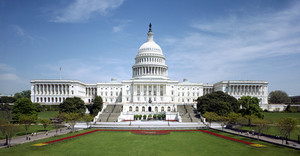
Regulatory reform gains speed
On 15 July 2026, Reps. Langworthy (R‑NY) and Schrier (D‑WA) introduced the Expedited Access to Biosimilars Act (HR 9661), which would codify that comparative clinical efficacy studies are not the default expectation for FDA licensure. Both the House Energy & Commerce Committee and the Senate HELP Committee approved the bill unanimously within a week. Separately, the Biosimilar Red Tape Elimination Act—which would deem all FDA‑licensed biosimilars interchangeable without switching studies—cleared the Senate HELP Committee in June and the House panel in July after months of delay.
Other proposals linger
The STOP GAMES Act (curbing citizen petition delays) and the Biosimilar Inspection Modernization Act remain in committee. Senator Moody’s new bill (S 5059) to streamline review has seen no action. Meanwhile, structural barriers—patent thickets, PBM rebate practices, and reimbursement rules—remain unaddressed by Congress, despite testimony from experts like Aaron Kesselheim urging broader reforms.
A cautionary note from Reilly et al.
Against this backdrop, authors Reilly and colleagues argue that eliminating the interchangeable designation—whether through guidance or legislation—could erode physician trust. They contend that policies declaring all biosimilars interchangeable, and thus substitutable at the pharmacy level without physician approval, break the explicit assurances that only products with additional safety and efficacy data would qualify for such substitution [1].
‘Efforts to boost biosimilar adoption should focus on reforming PBM practices, which heavily influence market dynamics, rather than sacrificing rigorous standards that safeguard patient care and therapeutic stability,’ the authors emphasise.
The bottom line
While Congress has moved swiftly on regulatory streamlining, the Reilly et al. analysis highlights that interchangeability is not a mere paperwork hurdle—it is a confidence‑ building measure. With only 12 of 118 biologics losing exclusivity by 2034 having biosimilars in development, the US needs both speed and safeguards. Whether lawmakers will balance those priorities—or push ahead with blanket substitution—remains the open question.
Related articles
Biosimilar interchangeability: a necessary fix, but not a silver bullet
What is the future for the US biosimilar interchangeability designation
|
LATIN AMERICAN FORUM View the latest headline article: La ANVISA de Brasil actualiza las directrices sobre los estudios farmacocinéticos de los biosimilares Browse the news in the Latin American Forum! Register to receive the GaBI Latin American Forum newsletter. Inform colleagues and friends of this new initiative.
FORO LATINOAMERICANO Ver el último artículo de cabecera: La ANVISA de Brasil actualiza las directrices sobre los estudios farmacocinéticos de los biosimilares ¡Explore las noticias en el Foro Latinoamericano! Regístrese para recibir el boletín informativo GaBI Foro Latinoamericano. Informe a colegas y amigos sobre esta nueva iniciativa. |
Reference
1. GaBI Online - Generics and Biosimilars Initiative. Are interchangeable biosimilars at risk? [www.gabionline.net]. Mol, Belgium: Pro Pharma Communications International; [cited 2026 Sep 2]. Available from: www.gabionline.net/biosimilars/research/are-interchangeable-biosimilars-at-risk
Permission granted to reproduce for personal and non-commercial use only. All other reproduction, copy or reprinting of all or part of any ‘Content’ found on this website is strictly prohibited without the prior consent of the publisher. Contact the publisher to obtain permission before redistributing.
Copyright – Unless otherwise stated all contents of this website are © 2026 Pro Pharma Communications International. All Rights Reserved.

Guidelines
Brazil's ANVISA updates guidance on pharmacokinetic studies for biosimilars
Canada eliminates phase III trial requirement for biosimilar approvals


Reports
Central America moves toward joint evaluation of biosimilar medicines
The US$52 billion question: can the US keep biosimilars competitive?
Most viewed articles
The best selling biotechnology drugs of 2008: the next biosimilars targets
Global biosimilars guideline development – EGA’s perspective
Related content
ANVISA and DINAVISA sign MoU to strengthen border surveillance and regulatory cooperation

Home/Policies & Legislation Posted 15/09/2026
ANVISA updates understanding on biosimilar interchangeability
Home/Policies & Legislation Posted 22/07/2026
China's 12th VBP round accelerates shift to generics and biosimilars dual-track
Home/Policies & Legislation Posted 03/07/2026

Most viewed articles
The best selling biotechnology drugs of 2008: the next biosimilars targets



Post your comment