Biosimilars

Sandoz plans to launch five more biosimilars by 2020

Biosimilars/General | Posted 12/08/2016

Sandoz, the generics division of Novartis, has announced plans for five major global biosimilar launches by 2020.

Biosimilars: clinicians and regulators need to talk

Biosimilars/Research | Posted 05/08/2016

In Europe, there is a clear gap between the regulatory decisions that govern biosimilar approval and the recommendations of medical societies. The fact that the views of medical societies, whose members are the physicians that will prescribe biosimilars, disagree with those of regulators, may hold back biosimilar uptake. 

FDA rejects Sandoz’s biosimilar pegfilgrastim application

Biosimilars/News | Posted 05/08/2016

Novartis disclosed on 19 July 2016 that the application by its Sandoz unit to market a biosimilar version of pegfilgrastim has been rejected by the US Food and Drug Administration (FDA).

Pure red cell aplasia in a CKD patient after treatment with epoetin zeta

Biosimilars/Research | Posted 05/08/2016

Authors from the Versilia and Manzoni Hospitals in Italy report the case of a patient who developed pure red cell aplasia (PRCA) following subcutaneous administration of epoetin zeta, which is one of the two biosimilars of epoetin alfa licensed in Europe [1].

FDA advisors recommend approval of Sandoz’s etanercept biosimilar

Biosimilars/News | Posted 29/07/2016

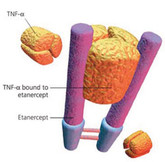
US Food and Drug Administration’s (FDA) advisors have voted to recommend the approval of Sandoz’s biosimilar version of Amgen/Pfizer’s arthritis blockbuster Enbrel (etanercept).

Biosimilars of tocilizumab

Biosimilars/General | Posted 29/07/2016

Last update: 4 December 2020

Tocilizumab is a humanized monoclonal antibody against the interleukin-6 receptor (IL-6R). It is an immunosuppressive drug used mainly for the treatment of rheumatoid arthritis and systemic juvenile idiopathic arthritis, a severe form of arthritis in children. In Japan, tocilizumab is also approved for the treatment of Castleman’s disease, a rare benign tumour of B cells.

The economic impact of biosimilars in the US

Biosimilars/Research | Posted 29/07/2016

Biologicals are large molecule compounds used to treat rare or complex diseases. Between 2013 and 2014, spending on specialty drugs, including biologicals, increased 32.4%, while spending on small-molecule drugs increased by just 6.8%. By 2016, eight of the 10 top-selling drugs are expected to be biologicals.

Positive clinical data for three anti-TNF-α biosimilars

Biosimilars/Research | Posted 29/07/2016

Results of studies of three biosimilars from Samsung Bioepis, Benepali (etanercept), Flixabi (infliximab) and candidate biosimilar SB5 (adalimumab), have shown ‘comparable outcomes with regards to both the efficacy and safety of treatment’ when compared to their respective reference products, according to the company [1-3].

Doctors want more details in biosimilars labelling

Biosimilars/Research | Posted 01/07/2016

In the European Union (EU), labels (Summaries of Product Characteristics, SmPCs) for biosimilars and their reference products are, in many instances, almost identical despite different data requirements for the authorization of biosimilars.

Mylan presents comparability data for trastuzumab biosimilar

Biosimilars/Research | Posted 01/07/2016

Generics giant Mylan Pharmaceuticals (Mylan) presented robust data from its biosimilar trastuzumab programme at the American Society of Clinical Oncology (ASCO) Annual Meeting ASCO 2016 held in Chicago, USA on 3–7 June 2016.

Real-world safety data for epoetin alfa biosimilar

Biosimilars/Research | Posted 01/07/2016

A 2-year post-marketing study of the epoetin alfa biosimilar Binocrit has found the biosimilar to be safe in daily clinical practice, according to the authors [1].

Health Canada approves Inflectra biosimilar for extra indications

Biosimilars/News | Posted 24/06/2016

US-based generics maker Hospira, now part of Pfizer, announced on 14 June 2016 that its infliximab biosimilar Inflectra had received approval from Canada’s medicines regulator, Health Canada, in three extra indications.

Biosimilar rituximab in biological naïve rheumatoid arthritis patients

Biosimilars/Research | Posted 24/06/2016

Cost remains a major constraint in the use of originator biologicals in rheumatology in developing countries, paving the way for ever increasing usage of biosimilars. However, apart from the cost, their efficacy and safety are of tremendous interest to clinicians in both developing and developed worlds.

Insulin biosimilar meets primary endpoint in phase III studies

Biosimilars/Research | Posted 24/06/2016

US pharma giant Merck announced on 13 June 2016 positive results from two phase III studies evaluating its insulin glargine biosimilar (MK-1293).

Improvement in uptake of biosimilars in Spain

Biosimilars/Research | Posted 17/06/2016

Author Ainhoa Aranguren Oyarzábal and colleagues from the Madrid Health Service (MHS), Spain found that there has been an increase in the uptake of biosimilars in Spain since indicators were introduced [1].

Immunogenicity of biologicals: the role of post-translational modifications

Biosimilars/Research | Posted 17/06/2016

Although produced under strict quality control(s) nascent endogenous proteins and glycoproteins (P/GP) are structurally heterogeneous and subject to further structural changes throughout their in vivo life cycle. A nascent polypeptide chain may be subject to co-translational modifications (CTMs) as it is extruded from the ribosome tunnel, e.g. the addition of oligosaccharide; edited for correct folding and initial oligosaccharide processing within the endoplasmic reticulum and subject to post-translational modifications (PTMs) during passage through the Golgi apparatus. The functional activity of a P/GP may be dependent on further chemical modifications (CMs), e.g. deamidation, enzymatic cleavage. These heterogeneities are compounded when determining the structure of a purified P/GP because further CMs may be introduced during its isolation, purification and characterization [1].

Alvogen opening biosimilars plant in Iceland

Biosimilars/News | Posted 17/06/2016

Iceland-based biopharmaceutical company Alvotech, a sister company of US generics company Alvogen, is set to open its state-of-the-art 11,800 square meter development and manufacturing facility for biosimilars in June 2016.

Effectiveness of ESAs in treating anaemia in kidney disease and cancer patients

Biosimilars/Research | Posted 10/06/2016

Erythropoiesis-stimulating agents (ESAs) are biological analogues of human erythropoietin used for the treatment of anaemia associated with chronic kidney disease (CKD) and chemotherapy treatment in cancer patients [1]. ESA biosimilars have been available on the Italian market since 2007. However, only limited post-marketing data exist on the comparative effectiveness of biosimilar and originator ESAs in routine care.

Biosimilars of eculizumab

Biosimilars/General | Posted 10/06/2016

Last update: 20 October 2017

Eculizumab is a humanized monoclonal antibody that is a terminal complement inhibitor. It is used to treat people with paroxysmal nocturnal haemoglobinuria (PNH), for whom it improves quality of life but does not appear to affect the risk of death. It is also indicated for the treatment of patients with atypical haemolytic uremic syndrome (aHUS) – a disease that primarily affects kidney function – to inhibit complement-mediated thrombotic microangiopathy.

Rituximab biosimilar from Sandoz accepted for review by EMA

Biosimilars/News | Posted 10/06/2016

Sandoz, the generics division of Novartis, announced on 24 May 2016 that its regulatory submission for its proposed rituximab biosimilar (GP2013) had been accepted by the European Medicines Agency (EMA).

Samsung Bioepis infliximab biosimilar accepted for review by FDA

Biosimilars/News | Posted 03/06/2016

Samsung Bioepis (a Biogen and Samsung joint venture) and Merck announced on 24 May 2016 that the US Food and Drug Administration (FDA) had accepted for review a Biologics License Application (BLA) submitted by Samsung Bioepis for the companies’ infliximab biosimilar candidate, SB2.

Monoclonal antibodies and the challenge of substitution

Biosimilars/Research | Posted 03/06/2016

Healthcare payers are eagerly awaiting the arrival of biosimilar competition in the innovative monoclonal antibody sector in order to drive down drug prices and increase patients’ access to these medicines. As the first to introduce scientific and regulatory requirements for the approval of biosimilars in 2004, the European Union (EU) has emerged as a testing ground for biosimilars. In view of the lack of stance of EU governments and national institutions on substitution for biosimilars, hospitals and healthcare structures logically took up this major issue.